
6 Grams of L-Arginine a Day Eased Fatigue in Tired Adults. 3 Grams Didn’t.
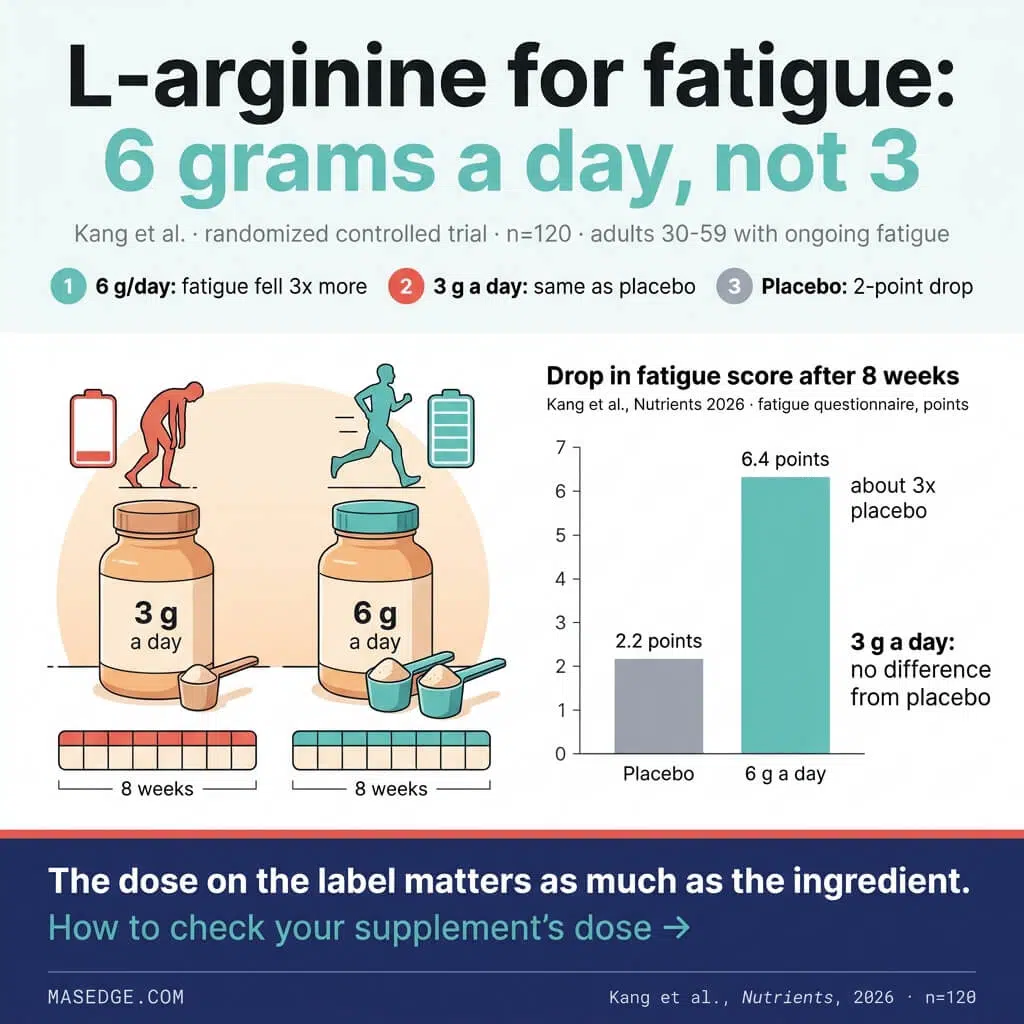
Taking 6 grams of L-arginine (an amino acid sold as a supplement) every day for 8 weeks eased fatigue in adults who felt worn out all the time.
The 120 people in the trial were 30 to 59 years old and had been dealing with ongoing fatigue before they started.
Their fatigue scores dropped about 3 times as much as the scores of people taking a placebo.
People taking 3 grams a day didn’t feel any less tired than the people on the placebo.
During and after a steady 30-minute treadmill run, the 6-gram group also had less lactate (a byproduct of hard effort) in their blood.
Their fatigue eased but didn’t go away, since the average score after 8 weeks was still in the fatigued range.
My Thoughts
When you buy a supplement, you probably check what’s in it and take the serving on the label without looking up whether that amount ever worked in research.
The research shows L-arginine only eased fatigue at 6 grams a day, so if your bottle gives you half that, you’re paying for a dose that won’t help.
That’s why we dose each ingredient in MAS products at the amount that worked in research, like the 3 grams of glycine in every scoop of Overnight Recovery.
Your takeaway?
Before you buy L-arginine or any other supplement, look up the dose that worked in the research and make sure one day’s serving on the label matches it.
A Year of Minimalist Shoes or Form Retraining Didn’t Clearly Beat Just Running
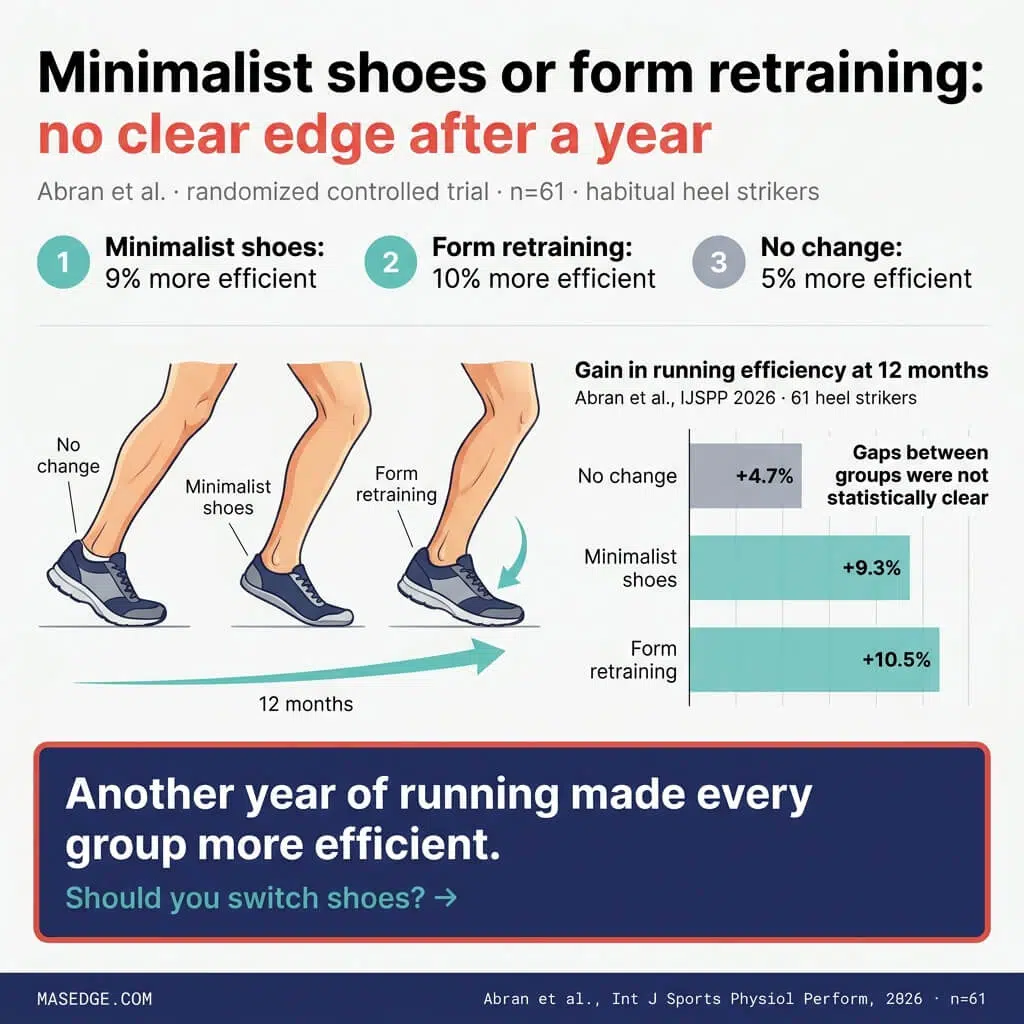
After a year, heel strikers who switched to minimalist shoes or retrained their stride weren’t clearly more efficient than heel strikers who changed nothing.
The trial split 61 heel strikers into those 3 groups and tested them over 12 months.
Running economy (how much oxygen it takes to hold a given pace) improved about 9% with minimalist shoes and about 10% with form retraining.
Runners who changed nothing improved about 5% over the same year.
Results varied widely from runner to runner, which is why the gaps between the 3 groups weren’t clear.
Foot and ankle measures didn’t change in any of the 3 groups.
My Thoughts
If you’ve bought barefoot-style shoes or spent months trying to change your foot strike, you did it to run more efficiently.
Your takeaway?
If you heel strike and you’re healthy, keep your current shoes and stride, because the research shows neither change gives you a gain you can count on.
A 40-Gram Protein Shake Before Bed Didn’t Hurt Athletes’ Sleep
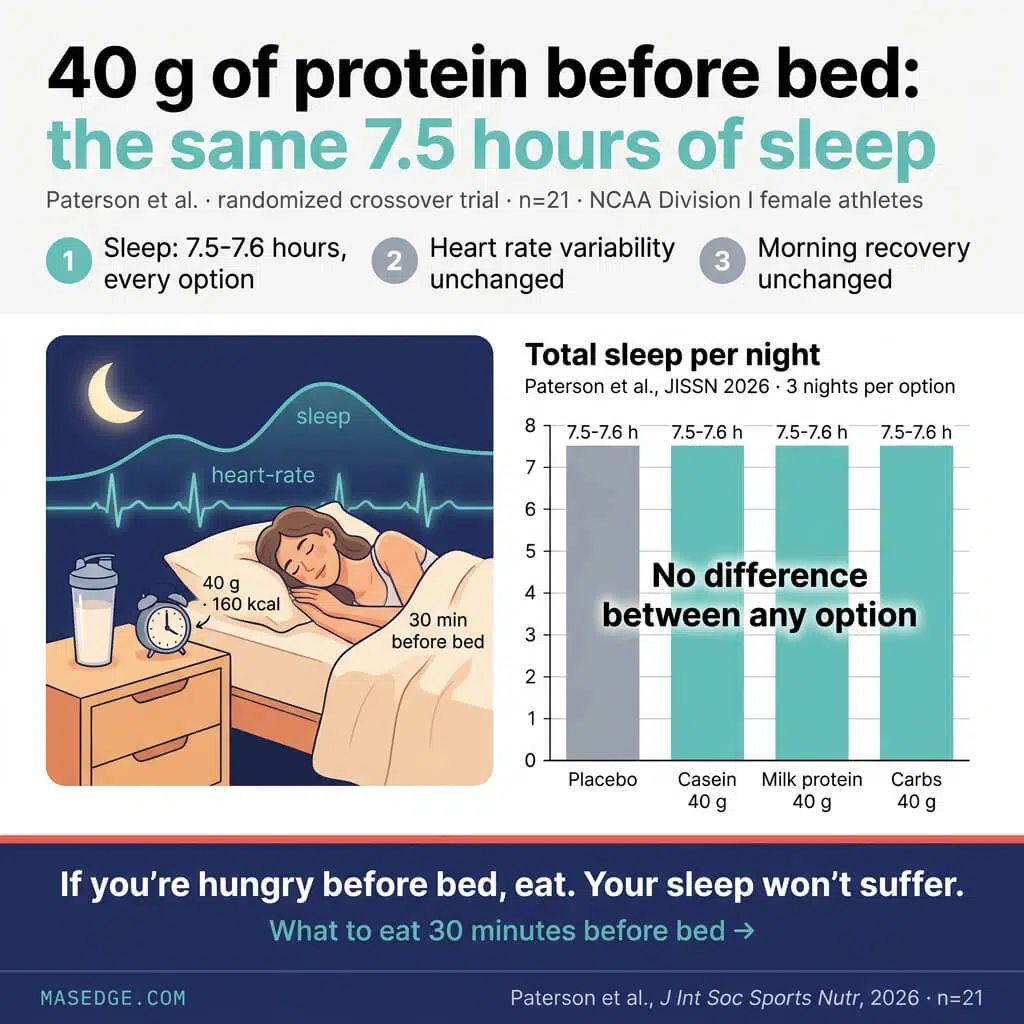
Having 40 grams of protein or carbs 30 minutes before bed didn’t change how long or how well athletes slept.
21 female college athletes each spent 3 nights on 4 options: casein (the slow-digesting protein in milk), a second milk protein, carbs, and a placebo.
Each real option was 160 calories, taken as the last thing they ate about 2 hours after dinner.
Nightly sleep stayed between 7.5 and 7.6 hours no matter which option they had.
Resting heart rate, heart rate variability and how recovered they felt each morning didn’t change either.
My Thoughts
If you run after work and then go to bed hungry because you think a late snack will keep you awake, you’re skipping food for no reason.
Your takeaway?
If you’re hungry at bedtime, eat up to 40 grams of casein protein or carbs about 30 minutes before bedtime, since the research shows it won’t negatively impact your sleep.