
In its 2023 position stand on female athletes, the International Society of Sports Nutrition named creatine, caffeine and iron as the supplements with the most evidence for use in women.
But creatine has a reputation as a lifter’s supplement, so runners who could benefit from it often write it off, worried it will add weight they’ll have to carry on race day.
So, does creatine help a female runner, and can you take it without gaining weight?
That’s what we’re going to dig into in this article, including:
- What creatine does in your muscles, and why women start with less of it
- How it affects your strength and your hardest efforts
- What it does for your muscles and bones after menopause
- And whether it will change your weight, including how to take it without a loading phase
What Does Creatine Do in a Female Runner’s Muscles?
Your muscles store creatine as phosphocreatine, which they use to rebuild ATP, the molecule that powers every muscle contraction.
A 2023 review of creatine and endurance research found that taking creatine raises the phosphocreatine in your muscles, so you can rebuild ATP faster and buffer the acid that builds up in a hard effort.
That means you have more fuel for the hardest parts of a run, like a hill, a surge or a finishing kick, which is where creatine helps endurance athletes the most.
Women start with less of this fuel. A 2021 review of creatine in women’s health compared the creatine stores of women and men.
Women have 70 to 80% lower natural creatine stores than men.
So you start a hard effort with less phosphocreatine to draw on, which may leave you more to gain from raising your stores than a man would.
Does Creatine Make Female Runners Stronger?
That same 2021 review found that creatine improves strength and exercise performance in women who haven’t gone through menopause.
Researchers have measured this directly.
A 1997 study had 19 women who were new to strength training lift for 10 weeks while taking either creatine or a placebo. The creatine group took a high dose for the first 4 days, then 5 grams a day.
The strength of the muscles the women trained rose 20 to 25% more in the women taking creatine than in the women taking a placebo.
For a runner, that extra strength comes from the squats, lunges and step-ups you already do, with no added sessions.
Creatine helped women who were already athletes too. A 2016 study put female soccer players through 6 weeks of jump training during their season, with either creatine or a placebo.
The players taking creatine improved more in their jumps and their repeated sprints than the players taking a placebo.
Repeated sprints put an athlete through the same pattern as a set of hill repeats, going hard and then recovering just enough to go hard again, so creatine can help you hold your effort through the later reps.
Keep your strength and jump training in your plan while you take creatine, because the strength gains in these studies came from women who were training alongside it.
What Does Creatine Do for Women After Menopause?
Menopause speeds up the loss of muscle, strength and bone density, and a 2026 analysis looked at whether creatine helps postmenopausal women hold on to them.
That analysis pooled 7 trials of about 600 women with an average age of 62, comparing creatine with a placebo.
The women taking creatine gained 0.37 kg (0.8 lb) more lean mass and added 7.5 kg (17 lb) more to their leg press than the women taking a placebo.
Those gains showed up in the trials where women took at least 5 grams of creatine a day and did strength training. The trials that used 3 grams a day or less without strength training found no effect.
That means after menopause you need both parts: at least 5 grams of creatine a day and regular strength training.
Bone density didn’t change in that analysis. But a 2023 study found that creatine helped the hip bone in a different way.
It followed 237 postmenopausal women for 2 years while they lifted weights 3 days a week and walked 6 days a week, taking either creatine or a placebo. The women took a dose based on body weight, about 9 grams a day for a 140 lb (64 kg) woman.
Bone density at the hip didn’t change in either group. But the women taking creatine lost less than 1% of the bending strength of the narrowest part of their hip bone over the 2 years, while the women taking a placebo lost about 4.5% of theirs.

The creatine group also walked 80 meters (87 yards) 1.5 seconds faster by the end of the study, while the placebo group’s time barely changed.
So creatine didn’t raise bone density in these women, but taken with strength training it helped their hip bone hold its strength.
Will Creatine Make You Gain Weight?
Creatine can add some weight, and the 2023 endurance review noted that this extra body mass may cancel out part of its benefit in sports where you carry your own weight, like running.
That weight is water held inside your muscle cells, and a loading phase, the high doses of about 20 grams a day used to fill your muscles in under a week, brings on more of it than a small daily dose.
Researchers have tested the opposite approach, a dose small enough that it fills your muscles slowly.
A 2011 study gave 20 young men and women (8 of them women) either a low daily dose of creatine, about 2.3 grams, or a placebo for 6 weeks.
The people taking the low daily dose had no change in body weight or body water, and they were 7 to 11% more resistant to fatigue in their later sets of leg exercise, while the placebo group didn’t improve.

That means you can skip the loading phase and still make your muscles more resistant to fatigue, without the jump on the scale.
A small daily dose still fills your muscles with creatine, it just fills them over weeks instead of days. A 1996 study in men found that 3 grams a day for 28 days raised muscle creatine by about 20%, the same rise that 20 grams a day produced in 6 days.
That means a small daily dose gets your muscles to the same place as a loading phase in about 4 weeks, without the high doses that bring the weight.
How Should a Female Runner Take Creatine?
Take 3 to 5 grams of creatine a day, the dose the International Society of Sports Nutrition recommends for female athletes in that same 2023 position stand.
The rest of the protocol comes from the studies above:
- Take it every day, including rest days and race week, because muscle creatine drops back to normal within about 4 weeks of stopping.
- Pick any time of day you’ll remember, since taking it daily matters more than when you take it.
- Skip the loading phase and give your muscles about 4 weeks to fill.
- Keep at least some strength or jump training in your week, because the strength results in women came with training alongside creatine.
- After menopause, take at least 5 grams a day, the amount the 2026 analysis linked to more muscle and leg strength.
The 2023 position stand also found both iron and creatine effective for female athletes, so it’s worth checking your iron levels as a runner while you take creatine.
If you change only one thing, take creatine every day, because missed weeks let your muscle stores slide back to where you started.
What Makes Creatine Easy to Take Every Day?
Every benefit in this article came from taking creatine every day for weeks or months, and your muscle stores fall back to normal within about 4 weeks of stopping.
The science on creatine monohydrate is settled, so the difference between products is whether you take it every day, and that is why the format matters.
Powder makes daily use a chore, because it’s gritty, it has to be mixed, and the grains that don’t dissolve can pull water into your gut and cause bloating.
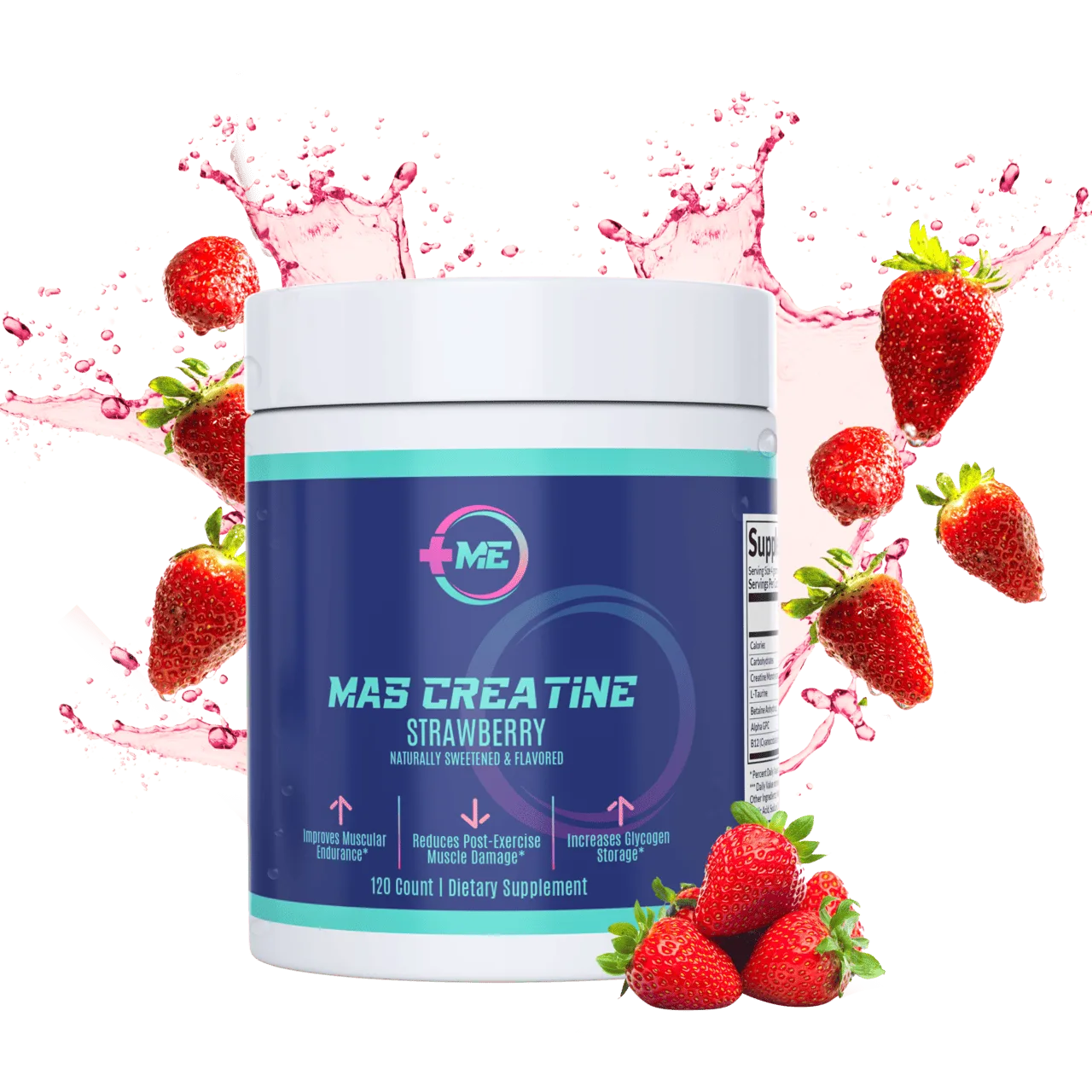
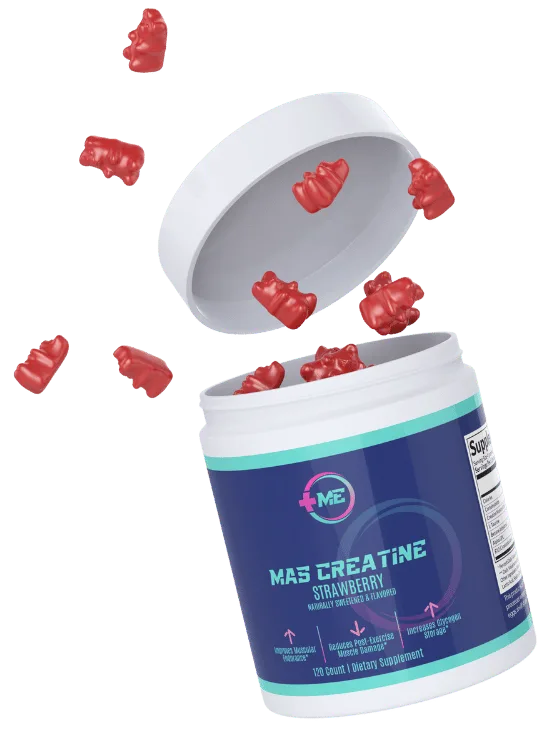
That’s why we formulated MAS Creatine around 5 grams of micronized creatine monohydrate in 4 strawberry gummies.
Micronized creatine is ground finer so it dissolves completely, which means there’s no grit, no mixing and nothing left sitting in your stomach.
And 4 gummies give you the full 5 grams, the amount the research in postmenopausal women found worked alongside strength training.
Creatine Gummies Designed for Endurance Athletes.
GET MAS CREATINE
- Designed to combat digestive stress
- Formulated to maximize glycogen storage
- Delicious and easy to consume
- Clinically dosed and third party tested
It’s the only creatine gummy formulated specifically for endurance athletes, built for runners who want the strength and muscle benefits in this article without the weight.
Take 4 gummies a day at any time, every day including rest days and race week, with no loading phase, and expect the full benefit after about 4 weeks of daily use.
What Should Female Runners Know About Creatine?
Here’s what the research in women found, and what to do with each result.
| Question | What the research found | What to do |
|---|---|---|
| Why does creatine matter more for women? | Women’s natural creatine stores start 70 to 80% below men’s. | Take creatine daily to raise your stores. |
| Will creatine make you stronger? | Women new to lifting gained 20 to 25% more strength, and female soccer players improved more in jumps and repeated sprints. | Keep strength and jump training in your week. |
| What does creatine do after menopause? | At 5 grams a day or more with strength training, women gained 0.37 kg (0.8 lb) more lean mass, and their hip bone kept its bending strength. | Take at least 5 grams a day and lift weights. |
| Will creatine make you gain weight? | A low daily dose changed neither body weight nor body water over 6 weeks. | Skip the loading phase. |
| How much creatine should a woman take? | 3 to 5 grams a day is recommended for female athletes, and a daily dose fills your muscles in about 4 weeks. | Take it every day, including rest days and race week. |