
The strength you’re trying so hard to build keeps getting more difficult to maintain the moment weekly mileage starts climbing.
That’s because running and lifting draw on the same recovery, and as the miles add up, the strength side is the first to fade.
Sports scientists call this the interference effect, and running is one of its strongest triggers.
Lifting tells your muscles to grow bigger and stronger. Running tells them to get more efficient at using oxygen over hours of effort.
Train both hard in the same block, and each adaptation comes out weaker than it would alone.
This is where creatine earns its place for the runner who also lifts. Its benefits line up almost exactly with the costs of training both at once.
In this article, we’ll look at the science behind:
- Why lifting and running are more difficult when done together
- Why lifting is still crucial as a runner and should be part of your plan
- How creatine speeds recovery between hard sessions
- How creatine helps fuel both running and lifting
Why Lifting and Running Cost More Together Than They Do Apart
Every runner who lifts knows both sessions burn energy and eat into recovery. The part most runners miss is that the two don’t simply add up.
Put a hard run and a hard lift in the same window and the total recovery cost is bigger than the two counted on their own.
Part of it is timing. A hard run and a hard lift each cause muscle damage that takes 24 to 72 hours to repair.
But, research shows it goes deeper than just a 1:1 need for added recovery.
Wilson et al. (2012) found that adding endurance training to a strength program reduced muscle growth and power, and that running caused significantly larger losses in size and strength than cycling did.
Running interferes more than cycling for a specific reason.
The eccentric loading of foot strike, the muscle lengthening under load each time you land, damages muscle in a way cycling doesn’t, so the repair demand is higher.
The same analysis found the interference got worse as endurance frequency and duration increased.
Combine lifting and running and each session costs more recovery than it would alone. That’s why gym strength is the first thing to go as weekly mileage climbs.
How Running Turns Down the Signal That Builds Muscle
Combining lifting and running does more than cost you recovery.
It limits the gains each session is meant to produce, and the effect is clearest on the strength side.
The reason is what’s happening inside your muscle cells when you lift versus when you run.
Strength work switches on a pathway called mTOR, the master switch for building new muscle protein.
Specifically, it’s what regulates muscle protein synthesis, the repair and growth response that follows hard lifting.
Running switches on a different sensor called AMPK.
AMPK regulates energy balance by increasing fat burning and glucose uptake, which makes you a more efficient aerobic engine.
Here’s the catch. When AMPK is active, it turns mTOR down.
Baar (2014) found that the metabolic stress of endurance exercise raises AMPK activity, which suppresses mTOR signaling and limits the muscle growth that strength training would otherwise produce.
Running raises AMPK, which turns down mTOR, the signal that builds muscle (Baar, 2014).
So a hard run does more than tire you out for the next lift. It suppresses the growth signal your lifting is trying to send.
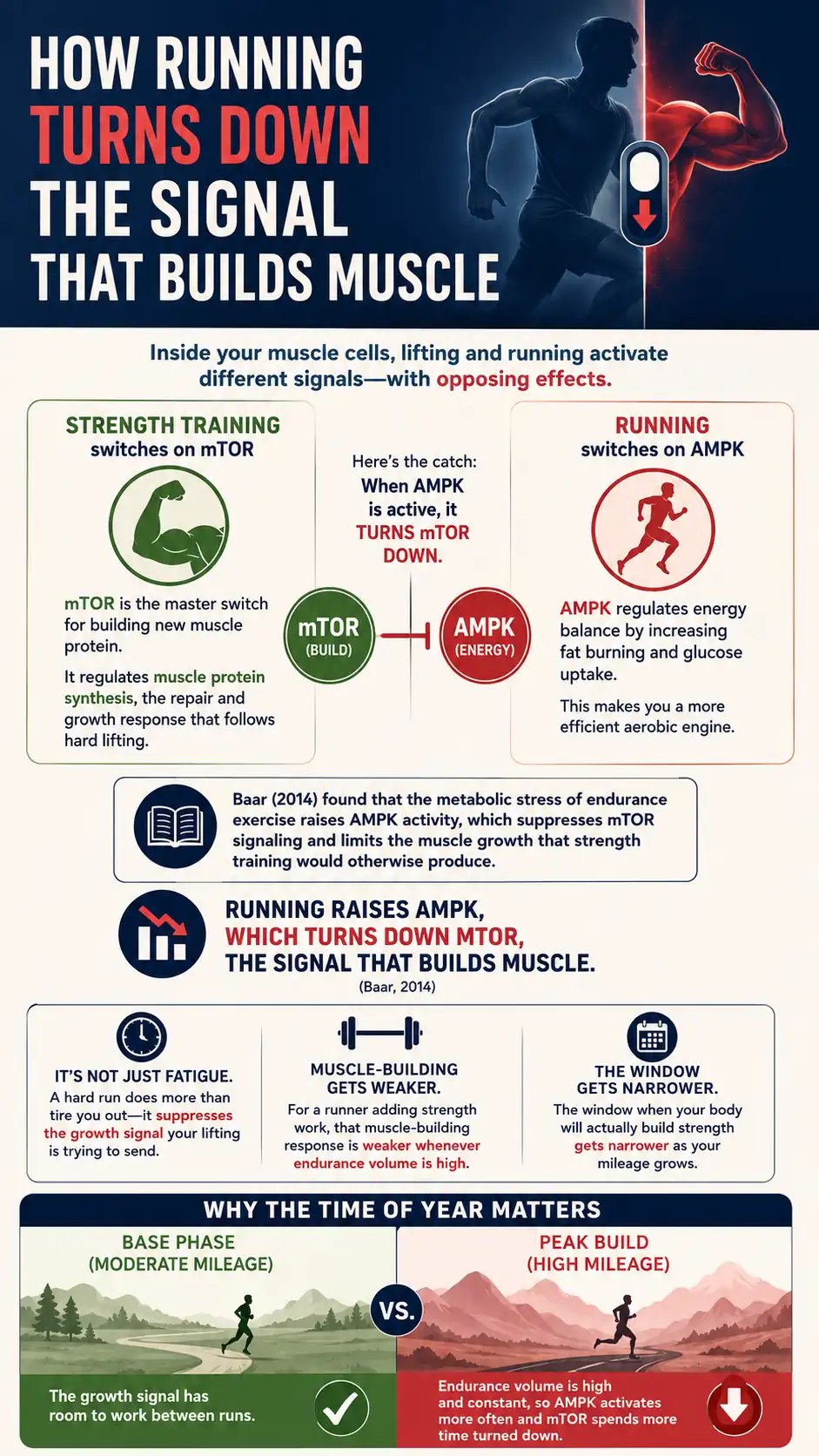
For a runner adding strength work, that muscle-building response is weaker whenever endurance volume is high.
The window when your body will actually build strength gets narrower as your mileage grows.
This is why the time of year matters. In a base phase with moderate mileage, the growth signal has room to work between runs.
In a peak build for a fall race, endurance volume is high and constant, so AMPK activates more often and mTOR spends more time turned down.
So Should Runners Stop Lifting Once Mileage Climbs?
Keep lifting. Strength work stays valuable through a marathon build.
What changes is how you lift, and when you push for gains versus hold what you have.
Done right, strength training makes you a better runner without adding size.
Blagrove et al. (2018) reviewed 24 studies of trained runners and found that 2 to 3 strength sessions a week improved distance-running performance, with no drop in VO2max.
The payoff comes from a more efficient, more durable stride, not a bigger aerobic engine.
The type of lifting is what makes that possible.
Heavy, low-rep strength work builds the neuromuscular qualities behind running economy without the soreness and muscle damage that high-rep, bodybuilding-style sets produce.
Støren et al. (2008) found that runners doing heavy half-squats, 4 sets of 4 reps, improved running economy by 5% over 8 weeks with no gain in body weight.
Heavy and low-volume gives you the running payoff while keeping the recovery cost and the interference low.
That’s exactly what you want when your mileage is already high.
Timing matters as much as type.
Build your strength early, in the base weeks of spring and early summer, when mileage is moderate and the growth signal still has room to work.
As mileage peaks for a fall race, shift from building strength to holding onto it.
Spiering et al. (2021) found that a single heavy session a week is enough to maintain strength for weeks, as long as the load stays high.
And as you increase your training in the fall, it’s critical that you do whatever you can to speed up recovery.
That’s why creatine earns so much attention from runners who also lift. It works directly on that recovery bottleneck, on all four fronts where running and lifting collide.
Can Creatine Speed Recovery Between Hard Sessions?
Creatine’s first job is refilling the energy your muscles burn in short, hard bursts.
Every sprint, hill rep, and heavy set runs on phosphocreatine, a stored fuel that rebuilds ATP. ATP is your cells’ immediate energy currency, and the faster that store refills, the faster you’re ready to go again.
Greenhaff et al. (1994) found that creatine supplementation increased the rate of phosphocreatine resynthesis during recovery from intense muscle contractions.
That matters most when your sessions sit close together. A tempo run one day and a heavy lift the next both draw on the same recovery process.
Creatine also reduces the damage side of the equation.
Cooke et al. (2009) found that supplementing creatine during recovery from muscle-damaging exercise preserved strength and cut the leak of muscle enzymes into the blood, a marker of tissue damage.
The effect shows up after long running too. In experienced runners, Bassit et al. (2004) tracked recovery markers after a 30 km race.
Bassit et al. (2004) found that creatine supplementation reduced creatine kinase, an enzyme released when muscle is damaged, along with two inflammation markers, after a 30 km race.
Faster recovery also protects the quality of your hard days.
Strides, hill reps, and threshold intervals only build fitness when you can hit them at full effort. When phosphocreatine refills faster, your last rep looks more like your first.
That’s the difference between a session that drives adaptation and one you struggle through.
The broader endurance benefits of creatine come from the same faster-recovery process working between your runs.
When lifting and running share the same week, faster recovery between sessions is what separates adapting from accumulating fatigue.
Does Creatine Protect Muscle When You’re Doing Both?
Recovery is half the story. The other half is protecting the muscle you’re building while endurance training works against it.
Running turns the growth signal down, and creatine helps raise it back up by supporting the cells that repair and build muscle.
Olsen et al. (2006) found that creatine combined with strength training produced a larger increase in satellite cells, the cells that build and repair muscle fibers, than strength training alone.
More satellite cells means more capacity to add and repair muscle tissue. That’s the capacity the interference effect reduces.
The muscle-preserving effect shows up clearest in the group that struggles most to hold lean mass.
Chilibeck et al. (2017) found that older adults who added creatine to resistance training gained significantly more lean mass and strength than those who trained without it.
Runners aren’t all older adults, but every runner adding mileage faces the same pressure toward muscle loss. Creatine gives the muscle-building side a measurable edge.
There’s a durability payoff too. The muscle you keep absorbs impact and stabilizes your joints as you run.
As mileage grows, that protection matters even more.
Losing lean mass during a build leaves your connective tissue doing work your muscles should share.
How Does Creatine Keep Both Systems Fueled?
Both halves of your training run on glycogen, the carbohydrate your muscles store for fuel.
Long runs drain it. Hard lifting drains it too, which surprises runners who think of the gym as low-fuel work.
Creatine helps you store more of it.
Nelson et al. (2001) had athletes load creatine before a standard carbohydrate-loading protocol.
Nelson et al. (2001) found that loading creatine before carbohydrate loading produced 53% greater muscle glycogen storage than carbohydrate loading alone.
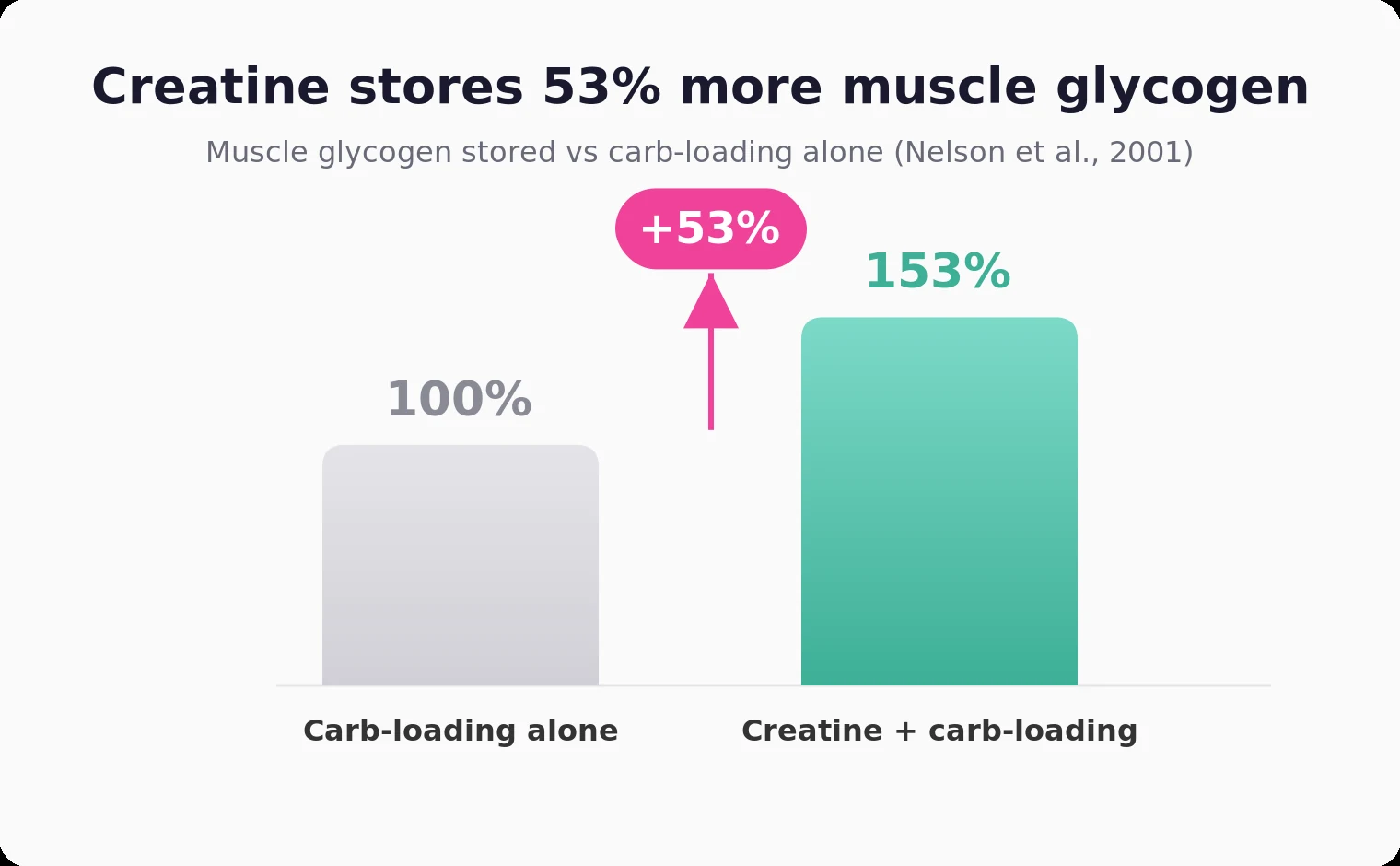
That extra storage helps on race day and on ordinary days, when you’re refueling for a run and a lift inside the same 24 hours.
The refill also happens faster.
Roberts et al. (2016) found that creatine sped how fast muscles rebuilt glycogen in the first day after exhaustive exercise, when the next session is often already close.
In practice, that shows up as fewer flat sessions late in a heavy week.
When your glycogen stores start fuller, the second and third hard efforts of the week feel stronger.
More stored fuel and a faster refill means both your runs and your lifts start closer to full every session.
How Should Runners Who Lift Take Creatine?
The protocol is simpler than the science behind it.
5 grams a day is the research-backed dose, and you don’t need a loading phase to get there.
Hultman et al. (1996) showed that a steady daily dose reaches the same full muscle saturation as rapid loading, just over a few weeks instead of a few days.
For a runner, skipping the loading phase is the point. The big doses of a loading week drive the water retention and stomach upset that give creatine its reputation, and a steady 5 grams avoids both.
Consistency beats timing.
Take it every day through your whole block, rest days included, because the benefit comes from keeping your muscles saturated, not from any single dose.
Start creatine a few weeks before your biggest block, not in the middle of it. That way your muscles are already saturated when the mileage and the lifting both peak.
Steady dosing also helps with the weight gain runners worry about. The early bump on the scale is water pulled into the muscle, and the breakdown of common creatine myths for endurance athletes covers why it isn’t fat.
The runner who lifts asks one supplement to do 4 jobs at once: speed recovery, reduce muscle damage, protect lean mass, and refill glycogen.
Creatine monohydrate is the exact form used in every study above, which is why it’s the version worth taking over pricier alternatives.
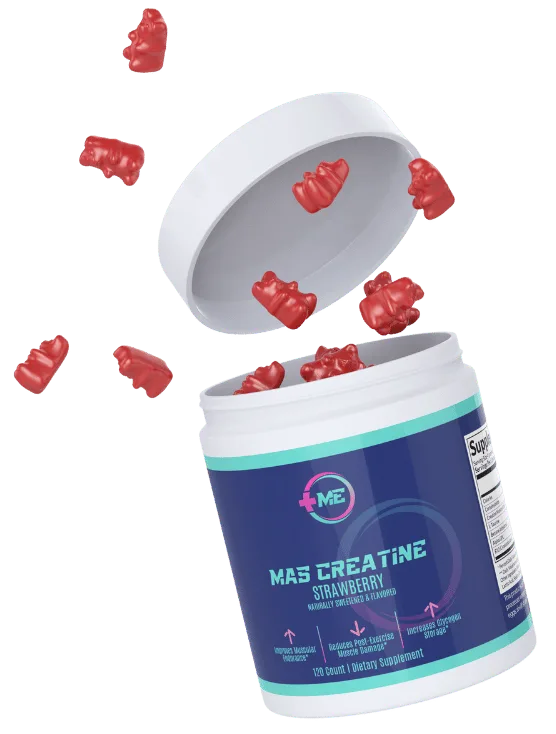
If you want that daily dose without the mixing and stomach issues of powder, MAS Creatine delivers 5 grams of micronized creatine monohydrate in 4 gummies.
Creatine Gummies Designed for Endurance Athletes.
GET MAS CREATINE
- Designed to combat digestive stress
- Formulated to maximize glycogen storage
- Delicious and easy to consume
- Clinically dosed and third party tested
Built for endurance athletes, the gummy format makes taking it every day through a heavy block realistic instead of one more chore you skip when life gets busy.
Running and lifting will always compete for your recovery. Creatine doesn’t erase that competition, but it shifts the result back toward adaptation on every front where the two disciplines compete.
| Factor | What Happens When You Lift and Run | How Creatine Helps |
|---|---|---|
| Recovery between sessions | Stacked training drains phosphocreatine faster than it refills | Speeds phosphocreatine and ATP resynthesis so you rebound quicker (Greenhaff, 1994) |
| Strength signal | Running raises AMPK, which suppresses the mTOR growth response (Baar, 2014) | Supports satellite cells and the muscle-building response strength work triggers (Olsen, 2006) |
| Muscle damage | Foot strike plus heavy loading raises damage and inflammation markers | Lowers creatine kinase and inflammation after hard efforts (Bassit, 2004; Cooke, 2009) |
| Lean mass | High mileage reduces the muscle your strength work is trying to add | Adds significantly more lean mass and strength alongside resistance training (Chilibeck, 2017) |
| Glycogen fuel | Runs and lifts both drain stored carbohydrate in the same week | Stores up to 53% more glycogen and refills it faster (Nelson, 2001; Roberts, 2016) |