

Why Experienced Runners Absorb Impact Differently Than Beginners

Running experience changes how your body handles ground impact. Experienced runners attenuate significantly more high-frequency shock than novices, suggesting their neuromuscular systems have adapted to protect joints and tissues.
Researchers compared three groups: middle-aged experienced runners (average age 53, running 9-30 miles per week), young experienced runners (average age 22, same mileage), and young novice runners (under one year of experience, 3-13 miles per week). All ran at a standardized pace while accelerometers measured impact shock at the shin and lower back.
Young experienced runners attenuated more axial shock in the 21-35 Hz frequency band than novices. The difference was substantial: experienced runners showed 49% better shock attenuation in this range. Age also mattered independently. Middle-aged runners attenuated less shock than young runners with similar experience.
The findings suggest two separate effects at play. Experience improves your body’s active shock absorption through gait adaptations. Age reduces it, likely through changes in tissue composition and neuromuscular response.
My Thoughts
This explains something coaches see all the time. New runners often complain about joint soreness that fades after a few months of consistent training. Their bodies are literally learning to absorb impact better.
What makes this study useful is the frequency-band analysis. Rather than just measuring total impact, researchers isolated specific shock frequencies. The 21-35 Hz range where experience mattered most corresponds to the frequencies that travel up the kinetic chain to your hips and spine.
The age finding is worth noting honestly. If you’re a masters runner, your tissues aren’t dampening shock as efficiently as they did at 25. This doesn’t mean you’re fragile. It means recovery days and surface variety might matter more for you than for younger training partners.
For newer runners: this is evidence that consistency pays off beyond fitness. Your neuromuscular system is adapting to protect you, but it takes time.
—
Protein Intake Around 1.0 g/kg May Protect Mobility as You Age
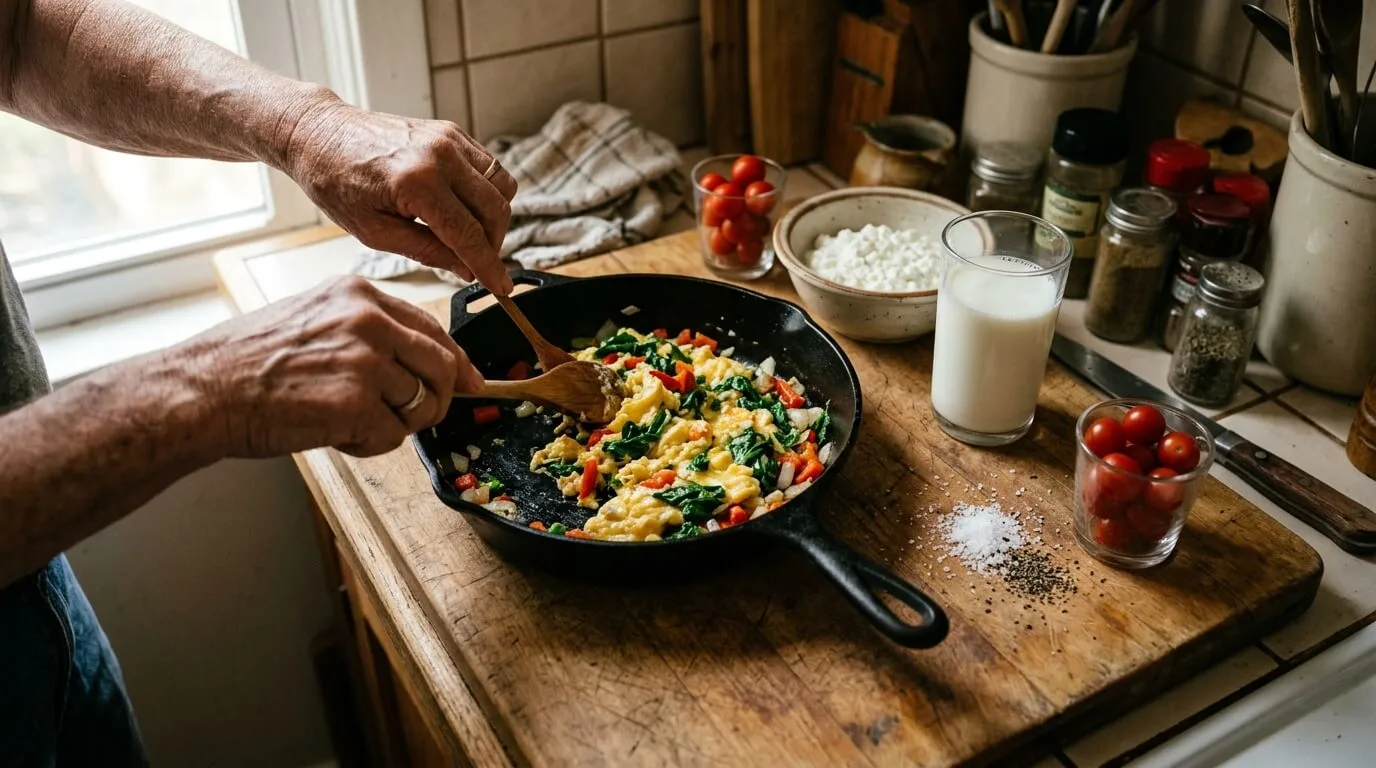
Older adults eating closer to 1.0-1.1 grams of protein per kilogram of bodyweight showed lower rates of mobility limitation. The benefit appeared to plateau beyond this threshold.
Researchers analyzed data from 5,736 U.S. adults aged 60 and older across four NHANES survey cycles (2011-2018). They used a target-trial emulation framework, a statistical approach designed to approximate what a randomized trial would show using observational data.
Mean protein intake was only 0.93 g/kg/day, with 42% of participants meeting the current RDA of 0.8 g/kg/day. Spline models revealed a steeper decline in predicted mobility limitation below 1.0 g/kg/day. Above that threshold, additional protein showed diminishing returns.
Exploratory analysis suggested inflammation (measured by hs-CRP) may partially mediate the relationship between protein intake and mobility.
My Thoughts
The practical number here is useful. For a 70 kg (154 lb) runner, 1.0 g/kg means roughly 70 grams of protein daily. That’s achievable without obsessive tracking or supplementation for most people eating whole foods.
What I appreciate about this study is the statistical rigor. Nutrition research is notoriously messy. The target-trial emulation approach and multiple sensitivity analyses make these findings more trustworthy than typical observational data.
The limitation is clear: this is still cross-sectional. We’re seeing associations at a single point in time, not tracking people over decades. But the nonlinear pattern (steep benefit below 1.0 g/kg, flattening above) aligns with what mechanistic research would predict about muscle protein synthesis thresholds.
If you’re currently eating around 0.7-0.8 g/kg, bumping to 1.0 g/kg may offer more protection than pushing from 1.2 to 1.5 g/kg. The biggest gains appear to be in closing the gap, not chasing excess.
—
Centenarian Supplement Use: Lower Than You’d Expect

Only about 11% of centenarians in China reported using dietary supplements. The finding challenges assumptions that extreme longevity requires extensive supplementation.
Researchers surveyed 2,877 centenarians (2,169 female, 708 male) from the 2018 Chinese Longitudinal Healthy Longevity Survey. They assessed prevalence, duration, and frequency of supplement use.
Calcium was the most common supplement (6.5-7.3%), followed by protein supplements (3.7-5.8%) and multivitamins (2.8-3.0%). DHA was the least commonly used at under 1%. Among those who did supplement, use was typically regular and sustained over 2-10 years.
The low overall prevalence suggests supplements were not a defining feature of these individuals’ lifestyles.
My Thoughts
This one is a good reality check for anyone who thinks they can supplement their way to longevity. Nearly 90% of people who made it to 100 in this cohort weren’t taking supplements at all.
The obvious caveat is that this is a specific population. Chinese centenarians may have different baseline nutrition, healthcare access, and genetic factors than Western populations. Calcium being the top supplement likely reflects targeted bone health concerns rather than anti-aging strategy.
What this study can’t tell us is causation in either direction. Maybe these centenarians didn’t need supplements because their diets were already adequate. Or maybe supplement non-use is incidental to their longevity, not a cause of it.
The takeaway for runners: supplements can fill genuine gaps in your nutrition or support specific training demands. But the fantasy that more supplements equals more health doesn’t hold up when you look at people who’ve actually lived the longest.