
Creatine only works when your muscles are full of it, and that takes a small dose taken every day.
So the short answer is 3 to 5 grams a day, after your run when you can, with a meal that has carbohydrate, and no loading phase. Keep taking it right through your taper and race week.
That covers the basics, but a few of those choices change how fast it works and how much you get out of it.
In this article, we’ll walk through each one:
- How much to take, and why the number is the same for a 120 lb (54 kg) runner and a 180 lb (82 kg) runner
- Whether you need a loading phase, and what you give up by skipping it
- When to take it, and whether that changes anything
- And why you should keep taking it through race week, not stop to drop water weight
How Much Creatine Should a Runner Take?
Take 3 to 5 grams of creatine monohydrate a day. A 2021 evidence review of the most common creatine questions reached the same number for athletes.
Creatine is well tolerated at 3 to 5 grams a day, or about 0.1 grams per kilogram of body weight (0.045 g per lb).
That dose doesn’t scale much with your size, because what you’re doing is topping off a store your muscles can only hold so much of.
Once your muscles are full, extra creatine isn’t held, it’s passed in your urine. So a 120 lb (54 kg) runner and a 180 lb (82 kg) runner land within a gram or two of each other, which is why 5 grams a day covers almost everyone.
That 5 grams a day is also the dose behind the recovery and glycogen benefits that make creatine worth taking as a runner in the first place.
Do You Need a Creatine Loading Phase?
You’ve probably seen a loading phase, around 20 grams a day for the first week, pitched as the way to start creatine, but for a runner you can skip it.
A loading phase gets your muscles full in about a week, and a small daily dose gets them just as full in about 4 weeks.
A 1996 study compared the two ways of starting in a group of men.
Muscle creatine rose about 20% on 20 grams a day for 6 days, and the same 20% on 3 grams a day taken over 28 days.
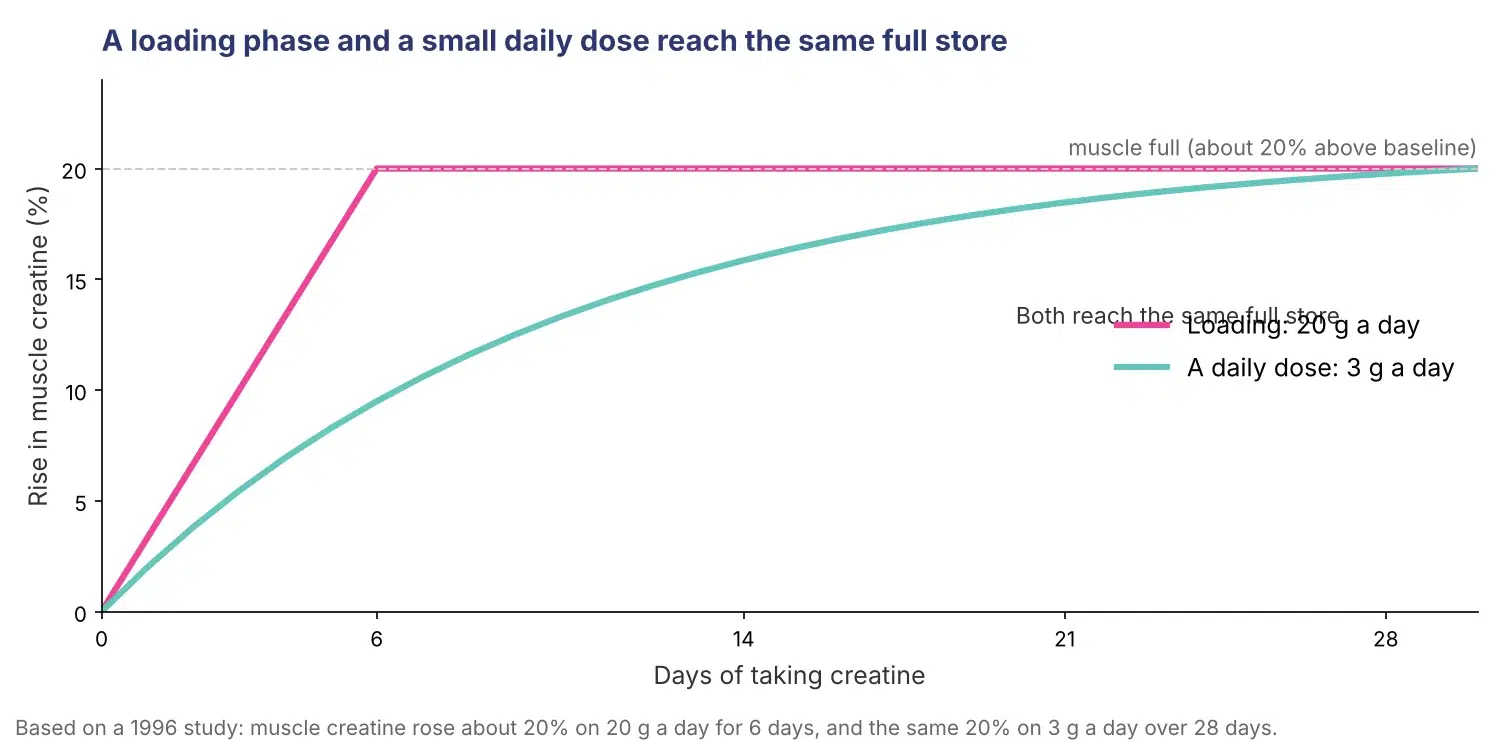
So the only thing a loading phase does is fill your muscles in days instead of weeks. The downside is more water-weight gain at the start and more chance of stomach upset from the big 20 gram daily doses.
Creatine’s benefits for a runner build up over a training block, so there’s no reason to rush to a full store in the first week. The weight-gain worry on creatine is mostly intracellular water, not fat, and it fades once your stores level off.
Should You Take Creatine Before or After Your Run?
Take it after your run when it’s convenient, but don’t lose sleep over the timing.
A 2021 review of creatine timing found that the evidence leans toward taking it after exercise rather than before, though the authors say the research isn’t strong enough yet to call it settled.
When researchers tested timing directly, the strength results came out the same either way.
A 2015 study had adults aged 50 to 71 take creatine either right before or right after lifting, 3 days a week for 32 weeks.
Leg press strength went up about the same whether creatine was taken before training (36.6 kg / 81 lb) or after it (40.8 kg / 90 lb), and both beat the placebo group’s 5.6 kg (12 lb).
So the timing barely moves your strength. The reason to lean toward after your run is simpler: it pairs creatine with your recovery meal, which is where the next section comes in.
The one timing rule that matters is taking your creatine every day.
Should You Take Creatine With Food?
Take your creatine with a meal or recovery drink that has carbohydrate in it, because the carbohydrate helps your muscles pull in more of the creatine.
A 1996 study in men had one group take creatine on its own and another take the same creatine with a large carbohydrate drink.
The men who took creatine with carbohydrate stored 60% more of it in their muscles than the men who took creatine alone.
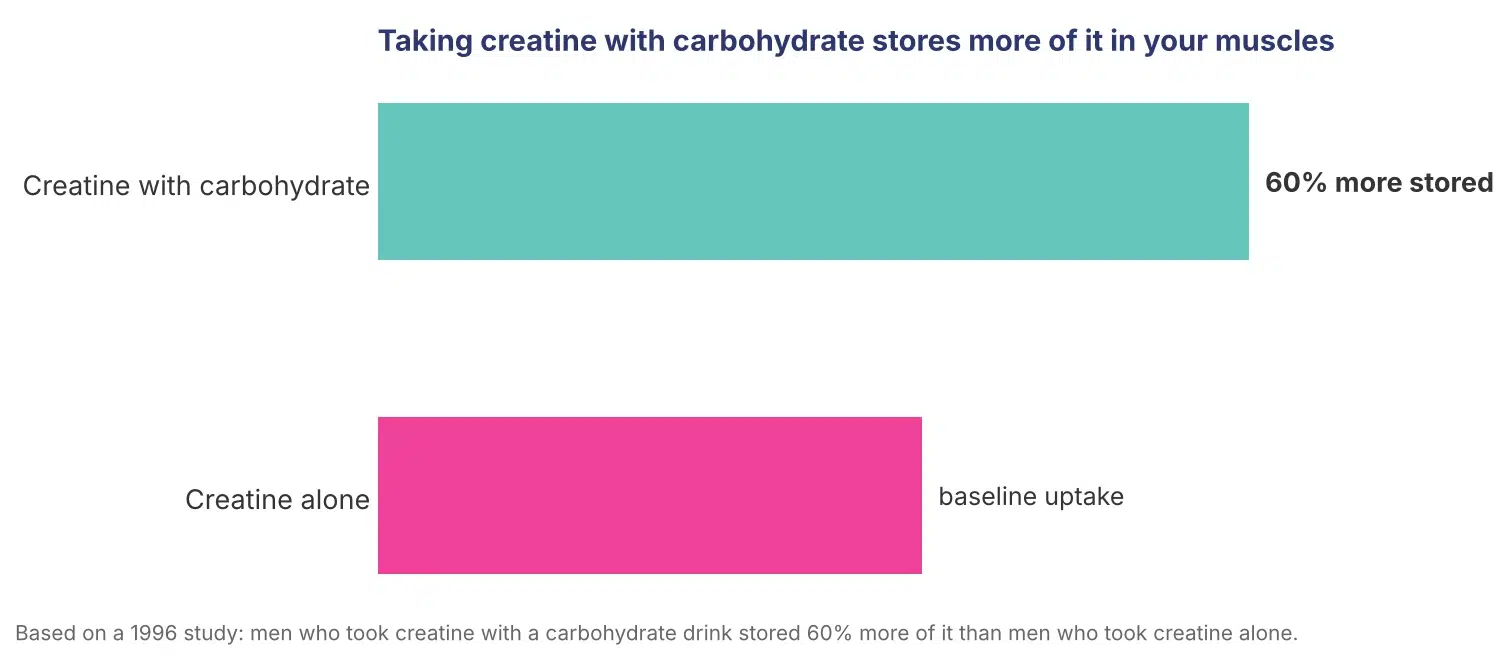
The carbohydrate works by raising insulin, which is the signal that drives creatine into your muscle cells.
You don’t need the big dose of sugar they used in the study. Taking your creatine after a run, alongside your normal recovery meal or drink, gives you the carbohydrate it needs without anything extra to plan.
Should You Keep Taking Creatine Through Your Taper and Race?
Keep taking creatine every day right through your taper and on race morning. Stopping to shed a pound of water is where runners give up the benefit they spent a whole training block building.
When you stop, your muscles don’t hold their creatine. The same 1996 loading study found muscle creatine drifted back to its starting level about 30 days after people stopped taking it.
Staying on it through race week is also when the recovery benefit shows up. A 2004 study had experienced marathon runners take creatine for 5 days before a 30 km race.
24 hours after the race, the runners on creatine had 19% less of the muscle-damage marker creatine kinase in their blood than the runners who didn’t take it.
That means less muscle damage to recover from in the days after a hard race or a long run, so you get back to training sooner.
There’s a fueling reason to stay on it too. A 2001 study in men found that carbohydrate loading on top of full creatine stores raised muscle glycogen 53%, so the carbohydrate you load before a marathon stores better when your creatine is already topped off.
What’s the Best Way to Take Creatine as a Runner Every Day?
Every rule above comes down to the same thing: take your creatine every day without fail. The product that makes that easiest is the one you keep taking.
Creatine monohydrate is creatine monohydrate, so the science is settled on the molecule, and the difference between products is whether you take it every day.
Powder makes daily use a chore, because it’s gritty, it has to be mixed, and the grains that don’t dissolve can pull water into your gut and cause bloating.
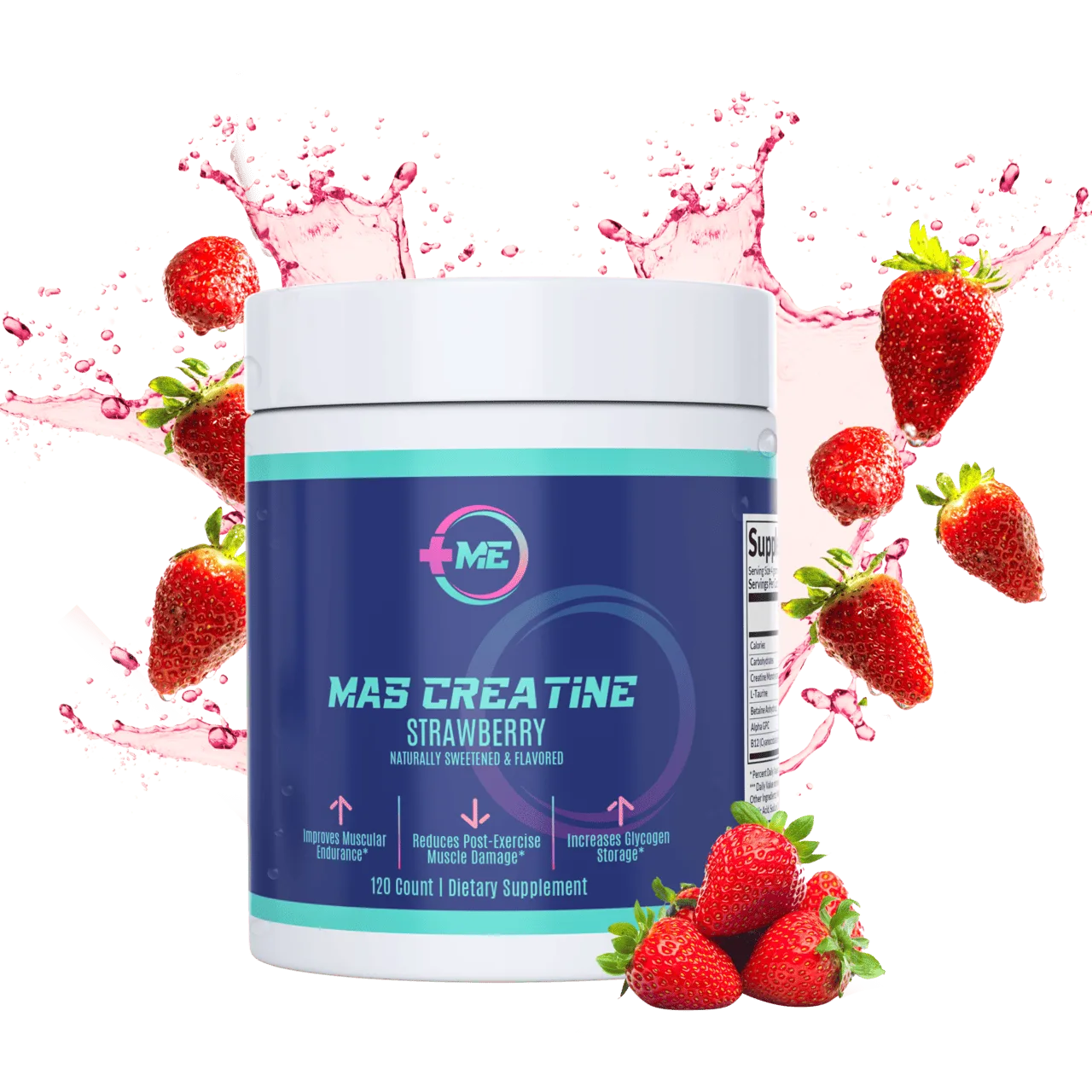
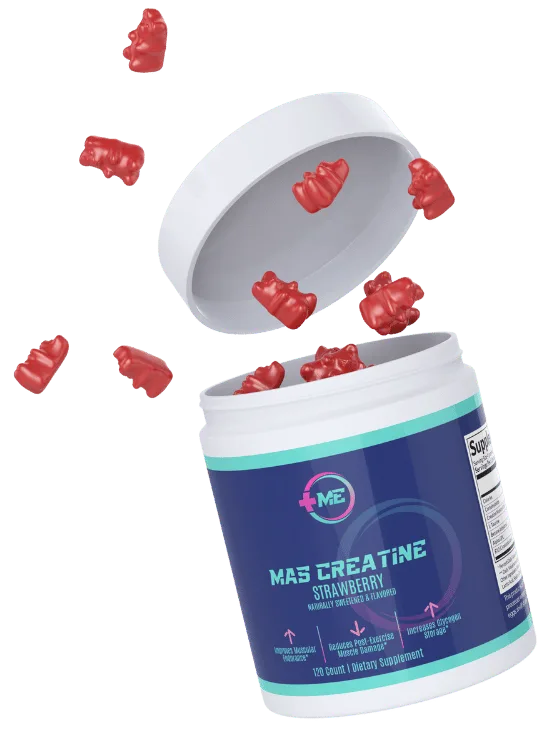
That’s why we formulated MAS Creatine around 5 grams of micronized creatine monohydrate in 4 strawberry gummies.
Micronized creatine is ground finer so it dissolves completely, which means there’s no grit, no mixing and nothing left sitting in your stomach.
The 4 gummies give you the full 5 grams, the dose the research supports, in about 10 seconds with no shaker bottle.
Creatine Gummies Designed for Endurance Athletes.
GET MAS CREATINE
- Designed to combat digestive stress
- Formulated to maximize glycogen storage
- Delicious and easy to consume
- Clinically dosed and third party tested
It’s the only creatine gummy formulated specifically for endurance athletes, so taking it after a run, every day through race week, is a habit you can keep.
Take 4 gummies a day, after your run with your recovery meal when you can, every day including rest days and race week, with no loading phase, and expect the full benefit after about 4 weeks.
What Should Runners Remember About Taking Creatine?
Here’s every decision in one place.
| Decision | What to do | Why |
|---|---|---|
| How much | 3 to 5 grams a day | Fills your muscle stores, and any extra is passed in your urine. |
| Loading phase | Skip it | A daily dose fills your muscles in about 4 weeks, with less water weight and stomach upset. |
| When | After your run, any time you’ll remember | Timing barely changes the result, so taking it daily is what matters. |
| With food | With a meal or drink that has carbohydrate | Carbohydrate raises insulin, which drives more creatine into your muscles. |
| Taper and race | Keep taking it every day | Stop and your muscles lose their creatine within about a month. |